Skip to content

Mary Queen of Heaven Newsletter Term 2 – Week 8

11th June 2026

A word from the Principal


Dear Families,

In recent weeks, we have had the privilege of welcoming many visitors to our school community. Through Prep enrolment interviews, visits from school leaders and staff, family learning walks, Melbourne Archdiocese Catholic Schools (MACS) personnel, kindergarten educators and, most recently, the Deputy Principal Network, our school has been showcased to a wide range of guests.

Following each of these visits, the feedback we have received has been overwhelmingly positive. Visitors have consistently commented on the calm and welcoming environment that exists throughout our school, the beauty and presentation of our learning spaces, and, most importantly, the respectful, kind and considerate behaviour of our students.

Hearing such affirming feedback fills us with great pride. While our facilities and grounds are certainly something to celebrate, it is the character of our children and the strength of our community that leave the most lasting impression on those who visit.

Throughout May and June, we have been interviewing prospective Prep families for enrolment at MQH in 2027. Throughout these conversations, one message has consistently emerged: our school is enjoying a wonderfully positive reputation within the Greenvale community.

Time and time again, families have described MQH as a warm, welcoming, safe, and nurturing school. Many parents have also commented on the confidence they have in our staff, noting that when concerns or incidents arise, our response is immediate, thorough, and focused on achieving positive outcomes for all involved.

Hearing this feedback has been both delightful and affirming. It reinforces that the practices, relationships, and culture we have worked so hard to establish are making a meaningful difference for our students and families.

We would like to sincerely thank all of you, our families, for the incredible role you play in promoting our school through positive word-of-mouth recommendations. Your advocacy is one of the greatest compliments we can receive and is invaluable in helping prospective families understand what makes our community so special.

Your support helps ensure our enrolments remain strong and, importantly, that the families joining our community share our values and vision for a school that is welcoming, inclusive, safe, and committed to the wellbeing and success of every child.

Thank you for being such wonderful ambassadors for MQH.


Today we bid farewell to Lisa Michelin as she begins her maternity leave. We wish Lisa and her family all the very best as they prepare to welcome their third child into the world.

We sincerely thank Lisa for her dedication and commitment to the Literacy Engagement Program. Her unwavering passion for ensuring every student grows and thrives has made a significant impact on our school community. We are grateful for the care, expertise and support she has provided to both students and staff, and we look forward to meeting the newest addition to her family.

As Lisa steps away, we are delighted to welcome back Amy Hodges, who will be taking on the role of Enhancement Educator. Amy is well known to many of our students and families, having built strong relationships through her previous classroom teaching role. Her knowledge, experience and commitment to student learning make her a wonderful addition to the team.

Welcome back, Amy. We are thrilled to have you rejoin the Mary Queen of Heaven community.


Reconciliation Week


Loving God,

As we reflect on Reconciliation Week, we thank You for the opportunity to learn about the histories, cultures, and contributions of Aboriginal and Torres Strait Islander peoples.

We thank You for the moments of listening, learning, and understanding that helped us grow as a community.

As people of faith, help us to carry the spirit of reconciliation beyond this week. Give us the courage to act with justice, the humility to listen deeply, and the compassion to build respectful relationships with others.

Guide us to be a community that welcomes everyone, values every voice, and walks together in peace and hope.

May we continue to learn from First Nations peoples and care for one another and our common home.

Help us to live as disciples of Jesus, showing love, respect, courage, and humility in all that we do.

We ask this through Christ our Lord.

Amen.


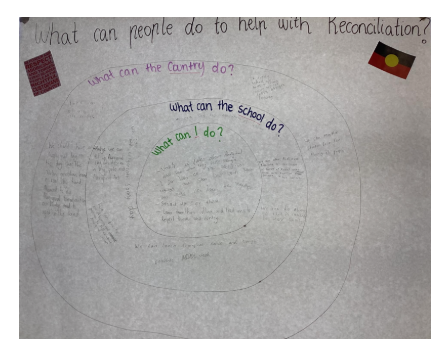
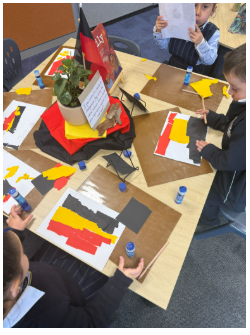
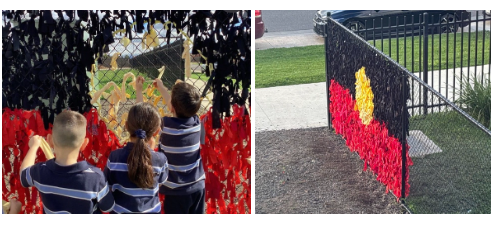
Last week we acknowledged and highlighted Reconciliation Week.  Our collaborative art installation stands as a powerful symbol of our learning during Reconciliation Week. While the completed artwork is a remarkable representation of the journey we have taken together, it was the conversations that occurred throughout its creation that were most meaningful.

As students worked side by side, they engaged in thoughtful discussions about the history and experiences of Aboriginal and Torres Strait Islander peoples. We heard children speaking about the Stolen Generations, the importance of truth-telling, and the ongoing need for recognition, understanding and reconciliation in Australia.

These conversations demonstrated a growing awareness that reconciliation is not simply about reflecting on the past, but about building a more just and respectful future together. Our students showed empathy, curiosity and a genuine desire to understand how we can all play a part in reconciliation.

We are incredibly proud of the maturity and respect our students displayed throughout the week. Their willingness to listen, learn and engage in meaningful dialogue gives us great hope for the future as we continue our journey towards reconciliation.
Emergency Management Drills

Each term, we conduct a range of emergency management drills, including evacuation, lockdown and shelter-in-place procedures. The regular practice of these drills helps ensure that both staff and students are prepared should an emergency ever affect our school community.

Through this ongoing repetition, our children have developed a strong understanding of the importance of being ready and responding appropriately in emergency situations. They consistently approach these drills with calmness, seriousness and respect, and they are to be commended for the mature manner in which they participate.

During our most recent drill, some families were temporarily stopped at the front gate as part of a realistic simulation of what would occur during a genuine emergency. We thank these families for their patience, understanding and cooperation. By working together, we can ensure that our procedures are effective and that our school community is well prepared for situations we hope will never arise.

The safety and wellbeing of our students, staff and families remains our highest priority, and we appreciate the support of our community as we continue to practise and refine our emergency management procedures.


Behaviour Management and Our Continuum of Response

At Mary Queen of Heaven, we follow our Behaviour Management Policy to ensure that our approach to teaching, supporting and managing behaviour is fair, consistent and reasonable for all students.

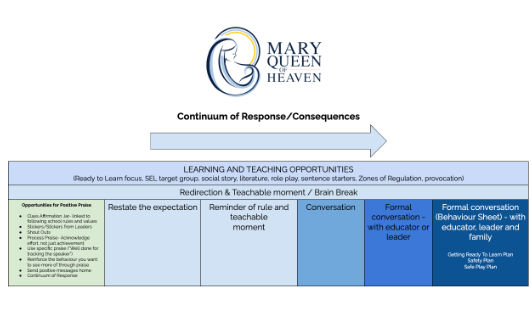
An important component of this process is our Continuum of Response. This framework helps students understand when they are meeting expectations and provides clear reminders and redirections when they need support to make positive choices. By following this continuum, students are given multiple opportunities to reflect on and self-manage their behaviour before any consequences are implemented.

I have included a copy of the Continuum of Response below and encourage families to take the time to revisit it with their children. Our students are familiar with the continuum and understand both the rewards associated with positive behaviour and the consequences that may result when expectations are not met.

When families are contacted by the school regarding a student receiving four reminders or a behaviour sheet, please be assured that staff have followed a consistent process that has provided multiple opportunities for the student to regulate, redirect and improve their behaviour. Our goal is always to support students in making positive choices while maintaining a safe, respectful and productive learning environment for all.

We value the partnership between home and school and thank families for their ongoing support in reinforcing these expectations with their children.
Safety After School

Thank you to all of our families who collect their children and make their way promptly to cars, footpaths and designated exits at the end of each school day. With close to 1,000 people on site during dismissal, it is essential that we all work together and follow our school procedures to ensure the safety of every member of our community.

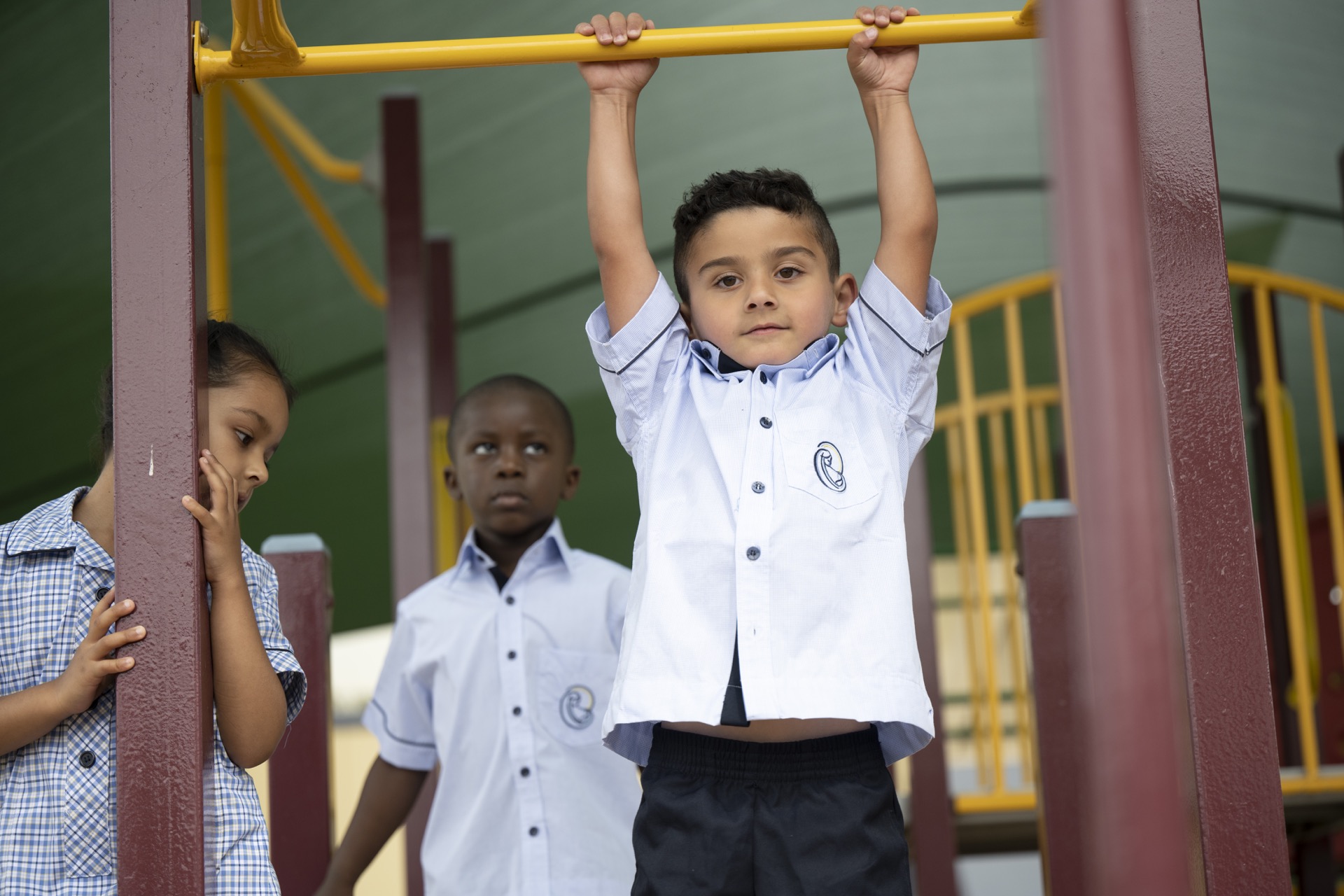
We ask families to please support us by reminding children that the adventure playgrounds and school ovals are not to be used after school. Due to the high volume of foot traffic and the inability to provide appropriate supervision at this time, activities such as playing on equipment or participating in ball games present a significant safety risk.

Making your way directly to the school gates helps to ensure children remain safe and allows traffic both within and around the school to flow more smoothly. We appreciate your ongoing support and cooperation in helping us maintain a safe environment for all students, families and staff.


Use of the Staff Car Park

Please be reminded that the staff car park is designated for staff use only and is not available for parent parking, drop-off or pick-up purposes.

There is no parent access from the staff car park into the school grounds. To ensure the safety of our students, staff and families, we ask that all parents and visitors refrain from entering or using the staff car park at any time.

We appreciate your cooperation and support in helping us maintain a safe and orderly environment for everyone in our school community.


Online Safety

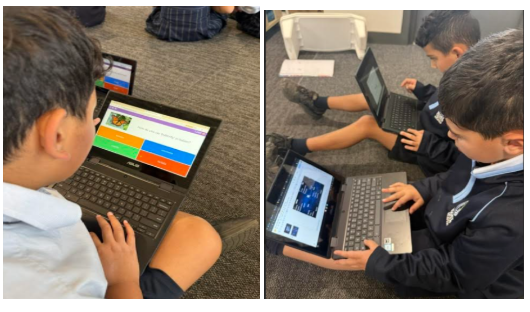
Online safety is a priority at Mary Queen of Heaven and is something we take very seriously. Through our classroom curriculum and Inform & Empower sessions, students learn how to behave responsibly online, how to protect themselves in digital environments, and what to do if they ever feel unsafe or uncomfortable.

Families play a vital role in supporting this learning at home. We encourage parents to monitor and limit screen time, engage in regular conversations about online activity, and ensure that primary school-aged children are not accessing social media platforms.

Unfortunately, many of the social issues we encounter at school have their origins in online interactions that occur outside of school hours. While we will always work with students and families to resolve these issues, prevention is by far the safest and most effective approach.

Platforms such as Messenger Kids and other social media applications can often be the catalyst for misunderstandings, conflicts and inappropriate interactions between children. We encourage families to carefully consider the suitability of these platforms and to actively supervise their children’s online engagement.

By working together, we can help our children develop positive digital habits and ensure they remain safe, respectful and responsible online citizens.



What is TikTok?

TikTok is a social media app for creating, sharing and discovering short videos on any topic. Videos you record in TikTok can be anywhere from 1 second to 10 minutes long. Videos you record outside of TikTok, but upload to TikTok, can be up to 60 minutes. You can also add comments, ‘mention’ or tag other users on videos, send direct messages and use TikTok LIVE to live stream and co-create with your audience.

The short video format lends itself to lip-sync, comedy and talent videos, but it is increasingly used by influencers who gain an audience by offering advice, tips, promotions and informational videos on a range of topics including beauty, fashion, personal finance, cooking and politics. TikTok’s algorithm, which determines the videos that appear on your ‘for you’ page, works by analysing the intricate details of how you use TikTok, including what you like, comment on, how much of a video you watch and the kinds of content you most want to see.

Social media age restrictions for under-16s

As of 10 December 2025, Australians under 16 can no longer access their TikTok accounts or create a new account. This change is in response to the Australian Government’s social media age restrictions.

These links are provided by TikTok:


Cross Country

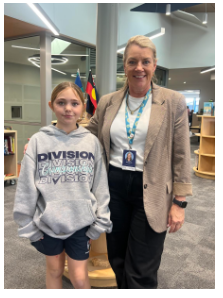
Savannah Polos in Grade 6 participated in the Divisional Cross Country event on Thursday 4 June at Kilmore Racing Club, in rainy and freezing conditions.

We are incredibly proud of Savannah’s perseverance, determination, and resilience. Competing in such challenging weather is an achievement in itself, and Savannah not only progressed through to the divisional round from placing 7th in districts but also finished in an impressive 17th place, representing Mary Queen of Heaven with pride, courage, and sportsmanship.

Congratulations, Savannah! We are so proud of your outstanding effort and achievement.
Learning and Teaching – Literacy

Read Time: ( words)

Writing beyond the classroom 

Students who enjoy writing may also be interested in entering external writing competitions throughout the year. These opportunities are completely optional and are not associated with the school. They provide a chance for students to showcase their writing and creativity to a wider audience. 


The links below provide information about a range of writing competitions that students may wish to enter.

2026 Writing Competition | Better Read Kids

 Competitions and Prizes – Story Studios Australia 

Imagination Creation Writing Competition | Wyndham City 

 What’s Your Story? Writing Competition Stonnington Libraries 

Write It Out: Greater Dandenong Short Story Competition – Writers Victoria

Victorian Premiers’ Reading Challenge 

The Victorian Premiers’ Reading Challenge is well underway, with students continuing to enjoy a wide range of books. There are still 91 days left, with the challenge ending on 4 September 2026. It’s great to see so many students already involved, and there is still plenty of time for others to jump on board, get reading and add to our total. Keep up the fantastic effort and happy reading! 

Learning and Teaching – Maths

Read Time: ( words)

Building Resilience in Mathematics

At Mary Queen of Heaven, we want every child to see themselves as a capable mathematician. One of the most important skills we nurture is resilience – the confidence to persevere when learning feels challenging.

In our mathematics lessons, children are encouraged to think deeply, make mistakes, explain their reasoning and try different strategies before seeking help. We remind students that learning happens when our brains are stretched, and that making errors is a valuable part of the learning process.

Our classrooms regularly use practices such as daily review, partner discussions, mini whiteboards and whole-class participation to ensure every child is actively thinking and engaging with mathematical ideas. Rather than focusing solely on getting the right answer, we celebrate persistence, curiosity and the willingness to have another go.

How you can support at home

You play an important role in helping your child develop a positive mindset towards mathematics. Here are some simple ways to help:

  • Praise effort rather than speed. Comments like “I love how you kept trying” encourage perseverance.
  • Normalise mistakes. Let your child know that everyone makes errors and that they help us learn.
  • Ask questions instead of giving answers. Try prompts such as “How did you work that out?” or “Can you think of another way?”
  • Use maths in everyday life. Cooking, shopping, measuring, playing board games and reading timetables all provide authentic opportunities to practise mathematical thinking.
  • Stay positive about maths. Children often adopt the attitudes they hear from adults, so avoiding phrases like “I was never good at maths” can make a real difference.

Together, by fostering resilience and a growth mindset, we can help our children become confident problem-solvers who are willing to embrace challenges and believe in their ability to succeed.

Here is an excellent, accessible resource that explains why mistakes are valuable, how brains grow through challenge, and how parents can encourage a positive mathematical mindset at home. It also provides practical language parents can use with their children.

https://www.youcubed.org/wp-content/uploads/2017/09/Parent-Night-Handout-2025.pdf 

Learning and Teaching – RE

Read Time: ( words)

“We Are All In”

Reconciliation Week Reflection

27th May – 3rd June 

Ephesians 4:2-3

“Be completely humble and gentle; be patient, bearing with one another in love. Make every effort to keep the unity of the Spirit through the bond of peace.”


The theme “We Are All In” reminds us that reconciliation is not the responsibility of a few people—it is a commitment that belongs to all of us. In this Scripture, St Paul encourages us to be humble, gentle, patient, and loving towards one another. These qualities are essential for building respectful relationships and creating communities where everyone feels valued and heard.

Reconciliation requires us to listen deeply, learn from one another, and work together in peace. Being “All In” means choosing to show respect, understanding, and compassion every day. When we make the effort to live in unity and peace, we help build a future where Aboriginal and Torres Strait Islander peoples and all Australians can walk together with hope and mutual respect.

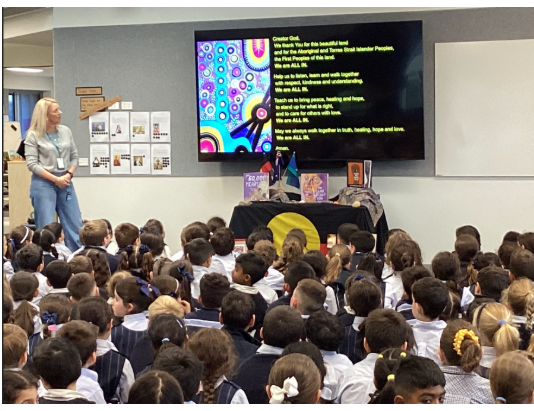
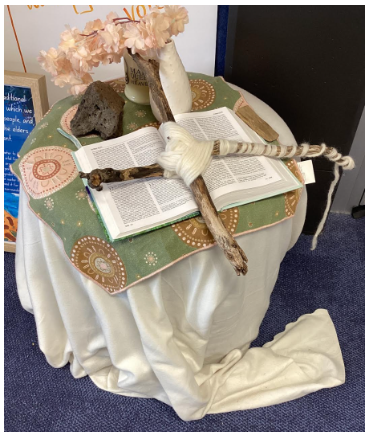
Our school gathered in unity at our Reconciliation Prayer Service

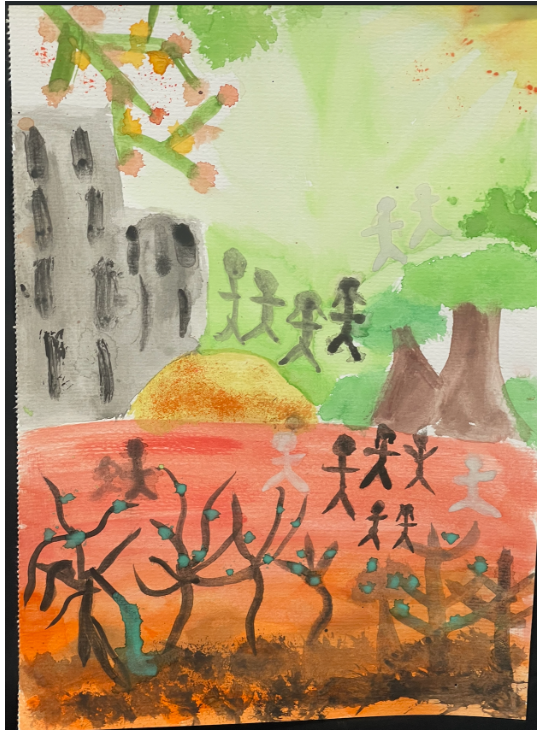
Artwork – ‘When They Came’ by Stella Jacobs Grade 5


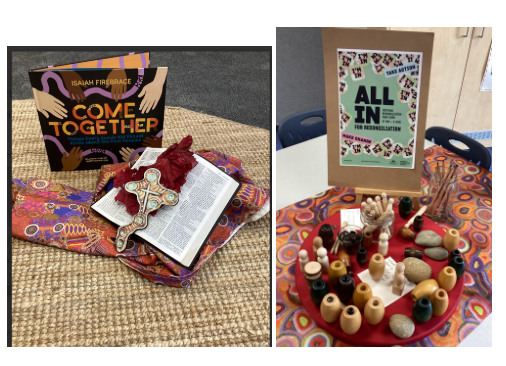
Images of Reconciliation in Our Classrooms

Throughout Reconciliation Week, our classrooms became places of reflection, learning and action as students explored what reconciliation means in our community. Through artwork, prayer, storytelling and discussion, students engaged with the theme “We Are All In”, recognising that reconciliation is everyone’s responsibility. These images capture moments of learning, respect and connection as students reflected on how they can contribute to a future built on understanding, justice and unity.

As followers of Jesus, we are called to love one another, seek peace, uphold the dignity of every person, and build relationships based on respect and compassion. As a faith community, we continue our commitment to listening, learning and walking together in the spirit of reconciliation, bringing the Gospel message to life through our words and actions.


Class mass dates for Term 2

Grade 2 and Grade 3/4 Class Mass  


Families of students in Grades 2 and 3/4 are warmly invited to join us for a combined Mass, celebrated by Fr. Dishan.

Date: Friday 19 June
Time: 12:00pm
Location: School Library

As we come to the end of a busy and rewarding term, this Mass provides an opportunity for us to gather as a faith community, give thanks for our learning and growth, and celebrate the many blessings we have shared throughout the term.

We look forward to celebrating together and welcome all Grade 2 and Grade 3/4 families who are able to attend. 


Learning and Teaching – Inquiry

Read Time: ( words)

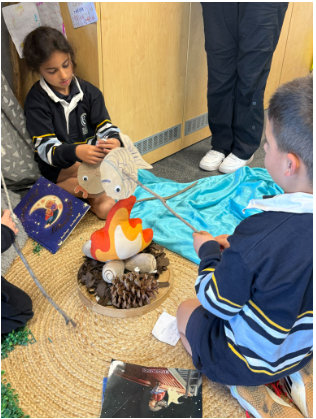
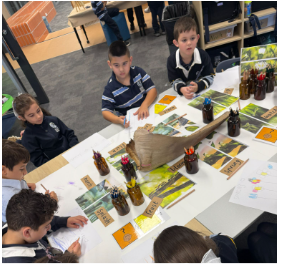
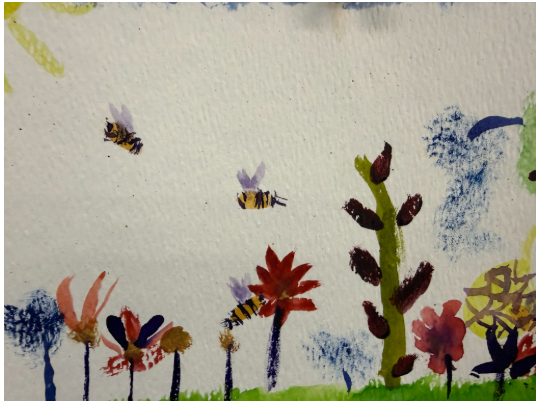
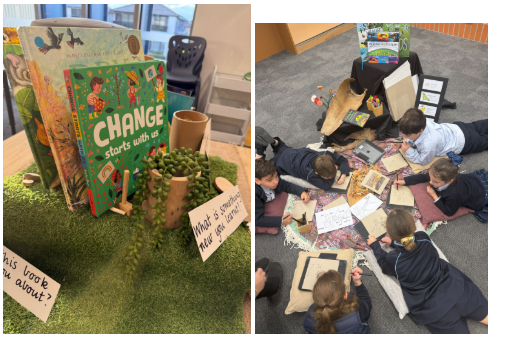
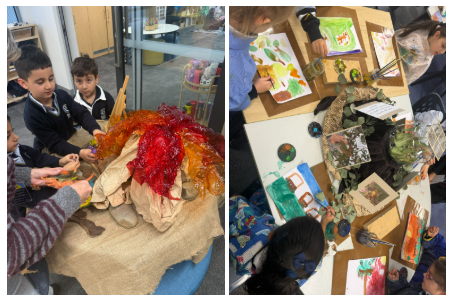
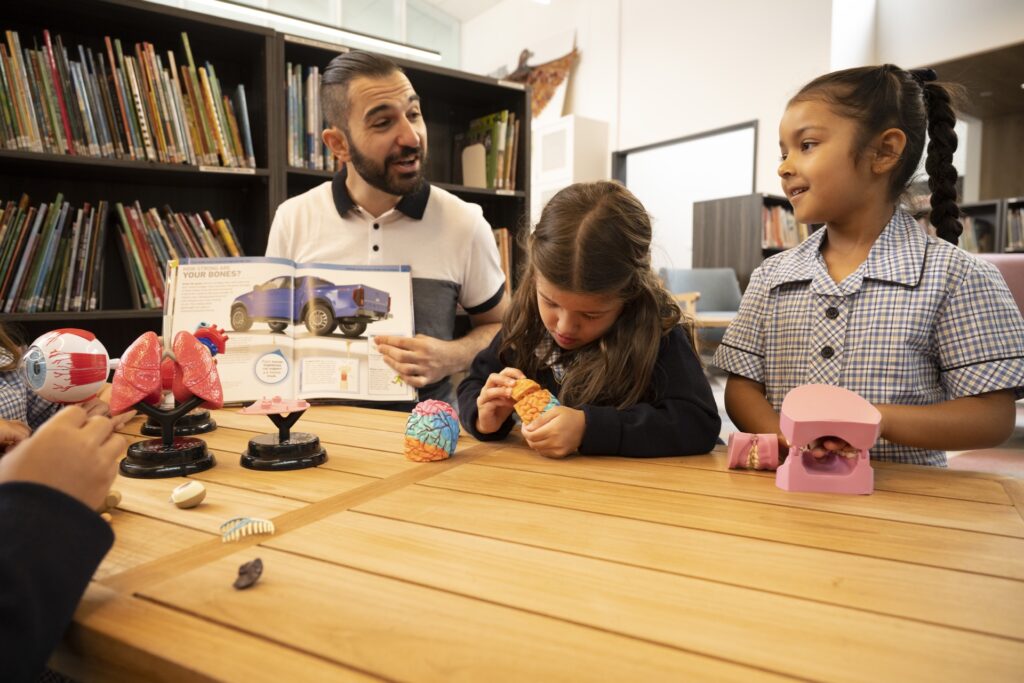
Celebrating “The Tiny Museum of Everything Alive!” Term 2 Inquiry Project

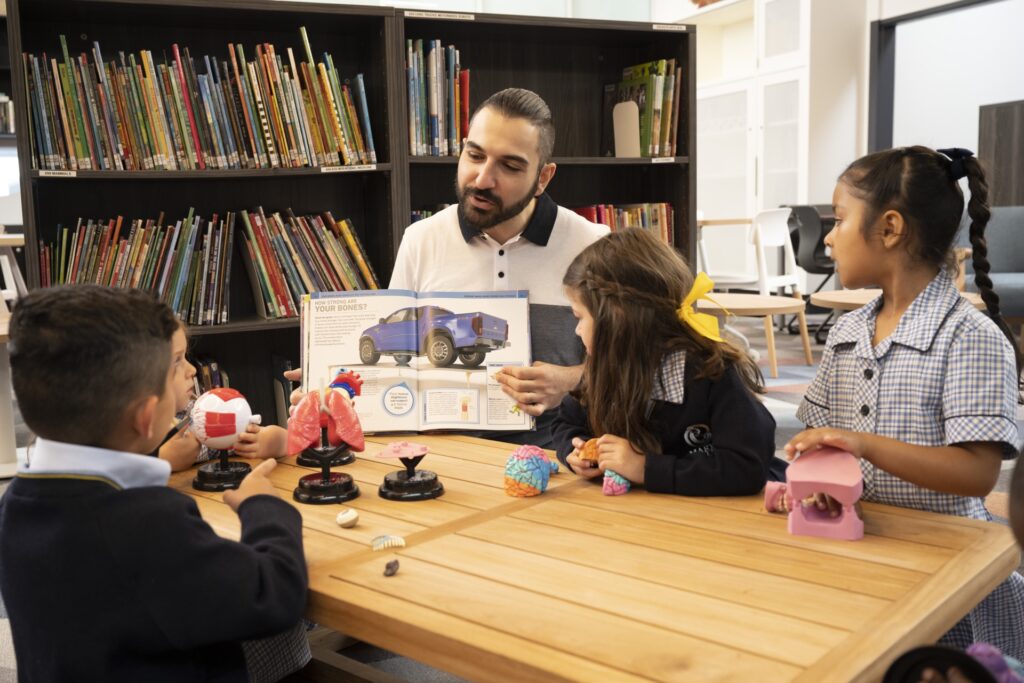
This week’s newsletter post is to acknowledge and celebrate the wonderful learning that all children at MQH.  Children learnt what it means to be a living creature in this wonderful world through the eyes of many different species.  Through this lens, we were able to appreciate God’s creation and consider ourselves as stewards of our land.  

Here are some snapshots from some magical moments.


Wellbeing

Read Time: ( words)

Mental Health in Primary Schools (MHiPS)

Mary Queen of Heaven is proud to be part of the Victorian Government’s Mental Health in Primary Schools (MHiPS) initiative designed to ensure that mental health and wellbeing are at the heart of every classroom. This program supports schools to build a ‘whole-school approach’ to mental health and wellbeing. We are supported by our dedicated Mental Health and Wellbeing Leader, who works alongside staff, students and families. Through this program, we have a dedicated Mental Health and Wellbeing Leader Sarah Brown. 

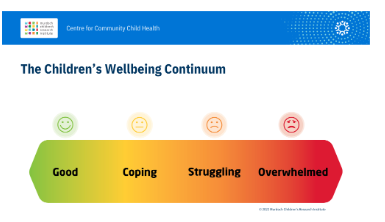
A key part of our wellbeing approach is helping students understand and recognise their emotions. One of the tools we use is The Children’s Wellbeing Continuum, which supports students to identify how they are feeling and encourages them to seek support when needed.

What does it mean for your child?

By using tools like the Wellbeing Continuum, MHiPS helps us:

  • Spot the signs early when a student might be struggling.
  • Give teachers the tools to support student growth in class.
  • Connect families with the right support services when needed.

Parent Guide: Understanding the Children’s Wellbeing Continuum

Mental health isn’t “on or off”—it is a sliding scale that changes as children face different experiences. The Children’s Wellbeing Continuum helps us move away from labels and instead focus on what a child might need.The continuum helps children recognise that feelings and emotions can change over time and that everyone experiences a range of emotions throughout their lives.

The Four Anchor Points

  • Good – Students feel positive, connected, calm and ready to learn.
  • Coping– Students may be experiencing everyday challenges but are managing with support from family, friends and teachers.
  • Struggling – Students may be finding things more difficult than usual. Feelings of sadness, worry, frustration or stress may be lasting longer or impacting daily life.
  • Overwhelmed -Students may be experiencing significant emotional distress and need additional support from trusted adults and wellbeing professionals.

3 Ways to Use This at Home

  1. Check in with your child- It is important to have open conversations with your child and encourage them to express how they are feeling. Encouraging children to focus not only on the negative, but what is going well in their lives.
  2. Look for Patterns, Not Just Moments- A bad day is normal. Use the continuum to reflect on your child’s wellbeing over time. If there are persistent changes in their usual behaviour or emotions, it may be a sign they need additional support.
  3. Use the Continuum as a Conversation Tool- Ask your child where they think they are sitting on the continuum and what might help them move towards “Good” or “Coping”. This can be a simple way to start meaningful conversations about wellbeing.

4. Act Early- If you notice your child moving towards ‘Struggling’ or have concerns about your child’s wellbeing, please contact your child’s classroom teacher or our Wellbeing and MHiPS Leader Sarah Brown. 

Together, we can help our students thrive both emotionally and academically.


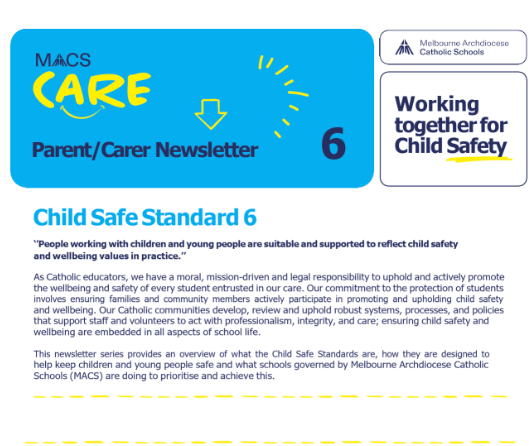
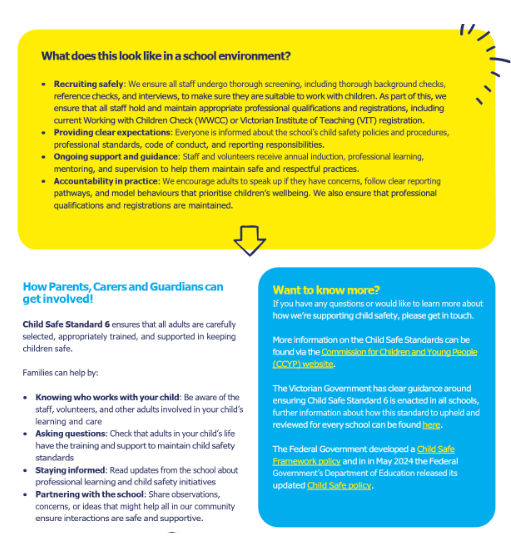
Child Safety

Read Time: ( words)


Learning Diversity

Read Time: ( words)

Celebrating Multilingualism: A Strength in Learning

In our diverse school community, many children grow up speaking more than one language. Sometimes families worry that learning English alongside another language might slow their child’s progress at school. The good news is that research consistently shows the opposite—being multilingual is a powerful advantage for learning.

Why multilingualism is a strength

Children who speak more than one language develop strong thinking skills. Moving between languages helps their brains become more flexible, improving problem-solving, memory, and creativity. These skills support learning across all subjects, from reading and writing to maths and science.

Multilingual learners also develop a deeper understanding of how language works. This awareness can actually make it easier for them to learn English over time, as they begin to notice patterns, similarities, and differences between languages.

Importantly, a child’s first language is the foundation for all future learning. When children have a strong base in their home language, they are better equipped to learn additional languages, including English.

The social and emotional benefits

Speaking more than one language also strengthens a child’s sense of identity and belonging. It allows them to communicate with family members, connect with their culture, and feel proud of who they are. This confidence plays an important role in their success at school.

How families can support their child

You don’t need to speak English fluently to support your child’s learning. In fact, continuing to use your home language is one of the best things you can do. Here are some simple ways to help:

  • Keep speaking your home language
    Talk with your child every day. Strong language skills in any language help build overall learning. Use the language you are most comfortable speaking.
  • Read together
    Read books, tell stories, or talk about pictures in your home language. This builds vocabulary and comprehension skills.
  • Encourage conversation
    Ask your child questions, listen to their ideas, and encourage them to explain their thinking.
  • Value all languages
    Let your child know that being able to speak more than one language is something to be proud of.
  • Connect with the school
    Stay in touch with teachers. If you need support with communication, schools can often provide interpreters or translated information.
  • Create a rich language environment
    Singing songs, sharing cultural stories, and talking about everyday activities all support language development.
A shared goal

At school, we are committed to honouring every child’s language journey. By working together; school and families; we can help children thrive academically while celebrating the rich languages and cultures they bring to our community.

Multilingualism is not a barrier to learning; it is a gift that strengthens children for life.

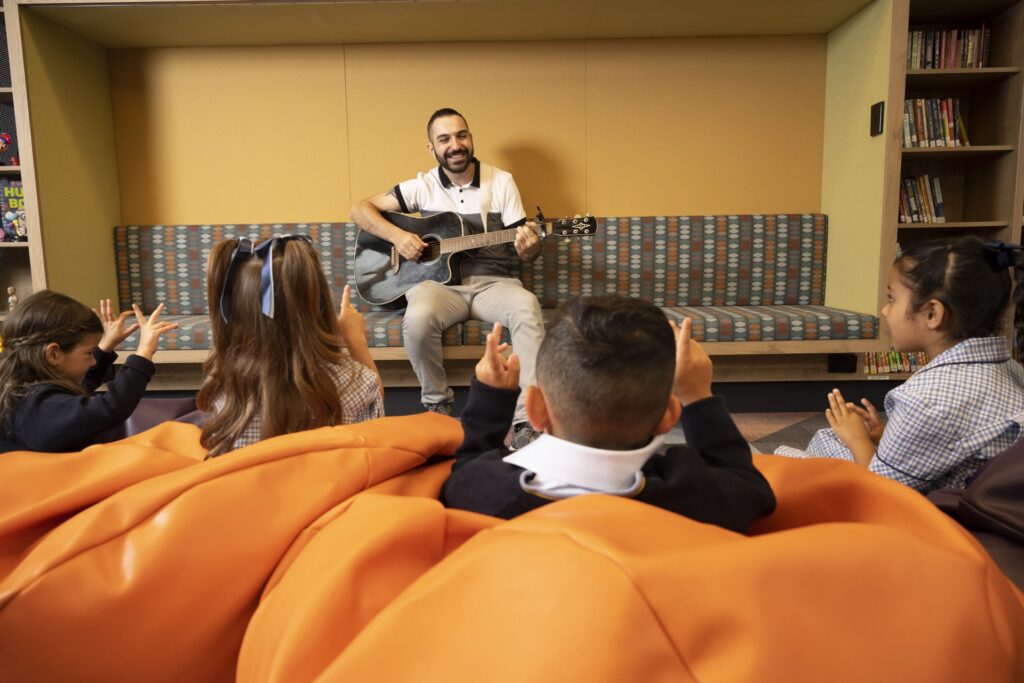
A word from our Specialist

Read Time: ( words)

From the Italian Room…

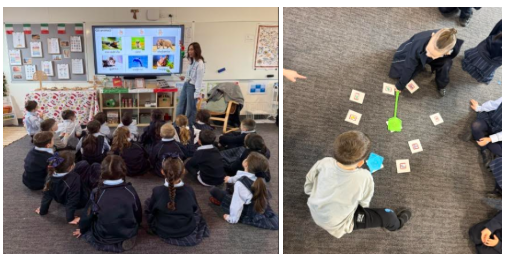
Prep

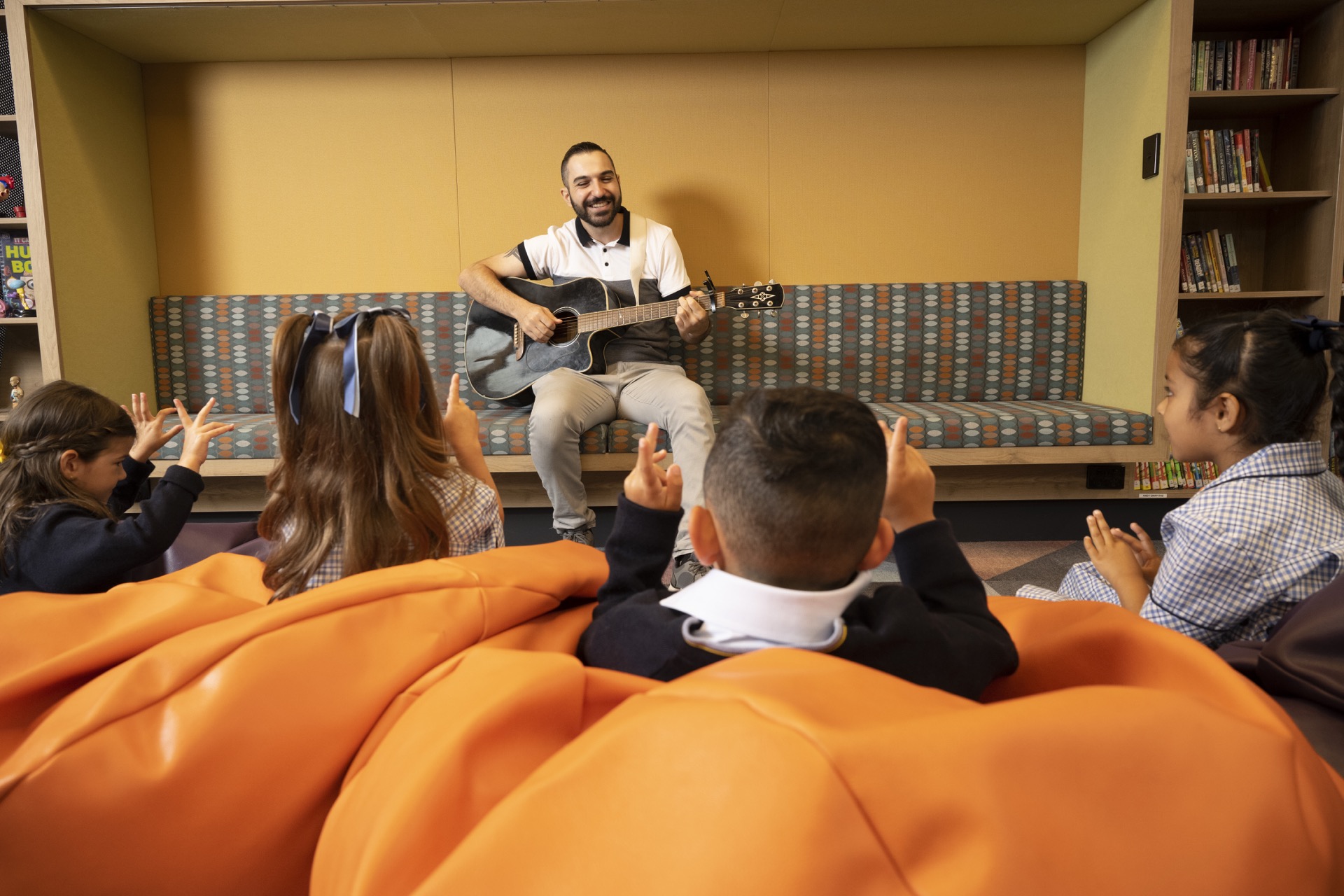
This term in Italian, Prep students have been learning the names of animals in Italian, such as cane (dog) and gatto (cat). They have explored a variety of animal words and practised saying and recognising them through songs, games and class activities. Students have also been learning simple describing words in Italian, such as grande (big) and piccolo (small), to talk about the size of different animals. It has been wonderful to see students confidently using their new Italian vocabulary during lessons.

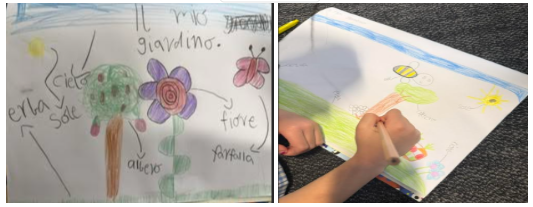
Grade 1

This term, Grade 1 students have been learning about Il Mio Giardino (My Garden). Students have been building their vocabulary by learning the Italian names for things we might see in the garden, such as farfalla (butterfly) and fiore (flower). Through engaging games, matching activities and labelling their own gardens, students have been developing their understanding and confidence in using these new Italian words.

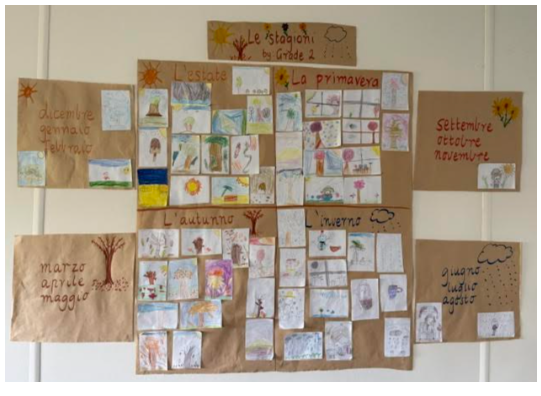
Grade 2

This term, Grade 2 students have been learning about the weather and seasons in Italian. Students have explored the names of the seasons, such as la primavera (Spring) and l’estate (Summer), along with weather vocabulary including soleggiato (sunny) and nuvoloso (cloudy). They have also been learning the months of the year in Italian and matching them to the correct season. Students have enjoyed participating in speaking, matching and collaborative classroom activities and games to strengthen their Italian language skills.


Grade 3-6

This term in Italian, students in Years 3–6 have been learning to name and describe animals in Italian. Students have explored a range of animal vocabulary and have been developing their speaking, listening, reading and writing skills through interactive class activities and games. They have been learning to answer questions about animal names, their features and where they live, as well as writing simple Italian sentences to describe animals and their characteristics. To strengthen their understanding, students have participated in engaging class games and quiz-style activities where they tested their knowledge by answering questions about animals. Students have also completed and published their “Chi sono io?” (“Who am I?”) task about their chosen animals, with some students confidently presenting their work to the class in Italian.


Kolbe Catholic College

MQH PROMO 4
Read Time: ( words)

Kolbe Catholic College – Year 7 2027 Enrolment Details

Applications for Year 7 2028 and beyond are now open.

Timeline for enrolment offers for Year 7 2028

  • 14 August 2026: Applications for Year 7 2028, close. Applications received after this date will automatically be waitlisted.
  • 16 October 2026: Offers emailed to prospective applicants.
  • 6 November 2026: Final date for families to accept offers made by College. Following this date, waitlisted families may be contacted if places become available.

Kolbe Catholic College has become a school of choice in Melbourne’s north which means that demand is exceeding the number of places available.  This means that it is imperative that all families must submit their application by 14 August in order to be considered.

All applications received after 14 August will be waitlisted whether they have a child at Kolbe or not.
Enrol now for Year 7 2028 (2)

Skip to content